
Who's Liable When a Truck Wheel Comes Off and Hits Other Cars?
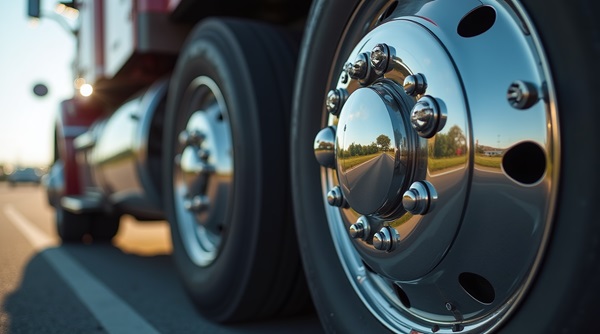
A recent traffic camera video released by the Kansas Highway Patrol (KHP) offers a startling reminder of just how dangerous neglected vehicle maintenance can be. Last year, a semi-truck lost a wheel while traveling on a Kansas interstate.
The runaway wheel struck two other vehicles before coming to rest, fortunately causing no injuries. But for troopers and safety experts, the incident highlights the consequences of skipping pre-trip inspections.
The video was shared publicly by KHP. It shows the wheel separating from the trailer’s axle and bouncing into traffic. Drivers in nearby vehicles had little time to react as the heavy wheel ricocheted across lanes.
Traffic cameras caught the entire sequence, providing law enforcement with evidence and offering the public a dramatic, real-world example of what can happen when routine maintenance is overlooked.
After the incident, a KHP trooper conducted a roadside inspection of the semi-truck. They found that the trailer’s wheel had elongated lug nut holes. This indicates that the wheel fasteners had been loose for some time.
As a result, the trailer was immediately placed out of service. According to troopers, this type of truck accident serves as a reminder that “we should all check our tires” before heading out on the road.
The legal weight of an "out-of-service" order
When the Kansas Highway Patrol placed that trailer "out of service," they created a permanent record of a "Critical Violation." In a lawsuit, this is powerful evidence.
It proves the truck was legally unfit to be on the road. At Pajcic & Pajcic, we use these roadside inspection reports to prove that the trucking company didn't just have a "bad day" but fundamentally failed to meet federal safety standards before the wheels even started turning.
Why do wheels fall off semi-trucks?
While wheel separation incidents are uncommon, they are almost always preventable. Wheels don’t just detach on their own; these failures typically result from a combination of mechanical issues and human error.
Common contributing factors include:
- Improperly torqued lug nuts: Loose or unevenly tightened fasteners can gradually work themselves free due to vibration and road stress.
- Rushed or negligent maintenance: Skipped inspections or incomplete service procedures leave critical components unchecked.
- Worn or damaged wheel parts: Elongated bolt holes, cracks, and weakened axles increase the risk of failure under load.
- Corrosion and metal fatigue: Rust or repeated stress over time can compromise structural integrity.
- Failure to re-torque after service: Neglecting to recheck torque levels after tire changes or replacements often leads to fastener loosening.
- Lack of thorough pre-trip inspections: A routine inspection would typically catch these issues before a wheel ever separates on the road.
It’s easy to underestimate the risk, but the consequences can be severe. Commercial vehicle wheels weigh hundreds of pounds and, when detached at highway speeds, can cause life-threatening damage. Runaway wheels don’t just threaten the truck driver; they put everyone in the surrounding traffic at risk. Even a wheel that strikes a single vehicle can trigger a chain-reaction crash, sending multiple cars off course or causing secondary collisions.
What types of truck crashes happen when wheels come off?
When a truck loses a wheel, the results can be sudden and devastating. A detached wheel weighing hundreds of pounds can turn into a deadly projectile, while the truck itself becomes dangerously unstable.
These incidents often trigger chain-reaction collisions that can injure multiple drivers within seconds. Common types of truck accidents caused by wheel separations include:
- Runaway wheel collisions: Detached wheels can bounce across multiple lanes or strike nearby vehicles with extreme force, often causing severe injuries or fatalities.
- Loss-of-control crashes: When a truck loses a wheel, the imbalance can cause the driver to swerve, jackknife, or overturn, especially at highway speeds.
- Multi-vehicle pileups: A loose wheel or an unstable truck can quickly trigger secondary crashes as other drivers try to avoid debris or an out-of-control vehicle.
- Rollover accidents: Losing a wheel can shift the truck’s center of gravity, making it tip over, particularly on curves or uneven roads.
- Underride collisions: Passenger vehicles may slide beneath a disabled or stopped truck after a wheel detachment, often with catastrophic results.
Who’s responsible when a wheel comes loose from an 18-wheeler?
When a wheel-off incident occurs, liability can be complicated. The driver, trucking company, maintenance shop, or even the equipment manufacturer could all bear some responsibility, depending on the circumstances.
- The driver: Under federal regulations, commercial drivers are responsible for conducting pre-trip inspections. Failing to identify loose lug nuts or damaged wheels could make a driver partially liable.
- The carrier or trucking company: Companies are responsible for ensuring their fleet is properly maintained. Missed maintenance, improper torque procedures, or neglected inspections can make the carrier legally responsible.
- Maintenance providers: If an external shop installed the wheels or performed maintenance incorrectly, they could be held accountable.
- Equipment manufacturers: In rare cases, defects in wheel design or materials can be a factor.
Proving fault in a wheel-off crash often relies on a combination of inspection records, maintenance logs, traffic camera footage, and expert mechanical analysis. In the I-35 case, the elongated lug nut holes provided clear evidence that the fasteners had been loose for some time, which could be an important factor in assigning responsibility.
Additionally, commercial vehicles are subject to strict safety regulations. The Federal Motor Carrier Safety Administration (FMCSA) requires drivers to conduct pre-trip and post-trip inspections, including checking tires, wheels, brakes, lights, and other important systems.
Proving the "paper trip" inspection
Our Florida truck accident lawyers often see cases where a driver’s logbook says they performed a pre-trip inspection, but the mechanical evidence tells a different story. Those elongated lug nut holes don't happen in five minutes; they are the result of weeks of neglect.
When we find a "clean" inspection log paired with a wheel that fell off due to long-term wear, it suggests the driver performed a "paper trip, "signing off on an inspection they never actually did. This can potentially lead to punitive damages against the trucking company for encouraging a culture of dishonesty.
Frequently asked questions: Truck wheel failures
What is "False Torque" and how does it cause accidents?
False torque happens when dirt, rust, or paint gets trapped between the wheel and the hub. The mechanic’s tool might say the lug nut is tight, but it’s actually just pressing against debris. As the truck moves, the debris crushes, the nut becomes loose, and the wheel begins to wobble. Truck accident lawyers often hire forensic metallurgists to examine the wheel studs to prove if "false torque" was the culprit.
Can the shop that last changed the tires be held liable?
Absolutely. Many trucking companies outsource tire service. If a third-party shop failed to follow the "re-torque" rule (which requires checking lug nuts after the first 50–100 miles of use), that shop may share liability for the crash.
How do you prove the wheel hit my car if the truck kept driving?
Hit-and-run wheel detachments are more common than people think. Lawyers can use a combination of paint-transfer analysis on your vehicle and DOT numbers from highway "weigh-in-motion" sensors to track down the specific trailer that lost the equipment.
Get justice after a truck wheel detachment accident
A runaway wheel is a 500-pound projectile that should never have been on the road. At Pajcic & Pajcic, we provide the relentless legal representation required to hold billion-dollar trucking empires accountable. We don’t just look at the crash; we look at the years of maintenance records and safety shortcuts that led to it.
Our law firm has a proven track record of success in cases involving truck accidents, including these notable results:
- $1 billion Nassau County verdict to the family of a college freshman killed in a crash caused by two negligent truck drivers.
- $141 million verdict to a family severely injured by a truck driver who fell asleep at the wheel.
- $26 million settlement for a fatal rear-end truck collision
- $13 million jury verdict for a victim who suffered severe injuries in a log truck U-turn crash on U.S. 1
Based in Jacksonville, we proudly serve clients throughout Florida and across the nation. To see how we can help with your potential legal case, contact us today to schedule your free consultation.
"A great law firm that truly goes the extra mile for its clients. I was in an accident (rear-ended) last year with neck and shoulder injuries, and they made sure I was compensated extremely fairly. This is not a one-and-done firm; they fought and rejected multiple offers from the insurance company until my fair settlement was met. Thank you very much, Pajcic and Pajcic." - K.D., ⭐⭐⭐⭐⭐