
One in Seven Trucks Inspected on Brake Safety Day Had Violations Serious Enough to Pull It Off the Road
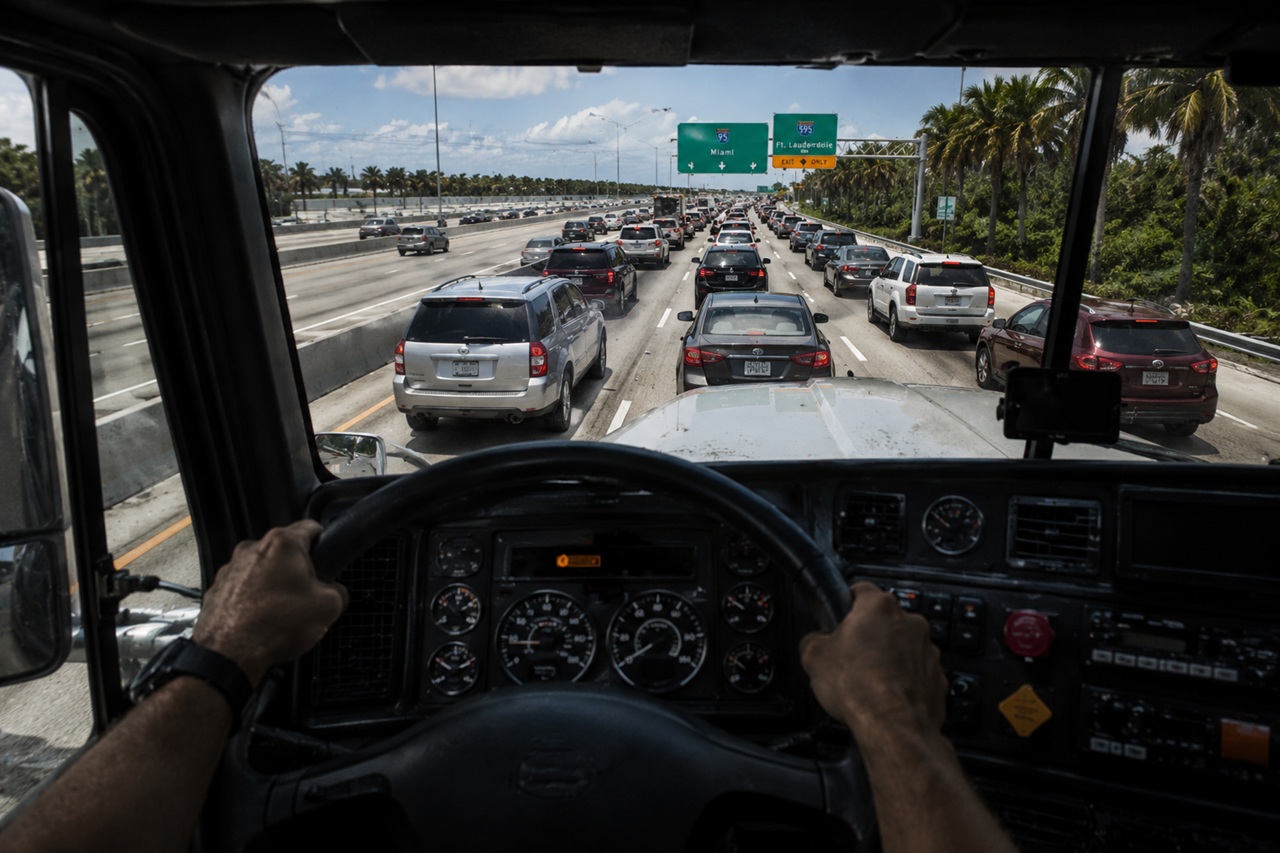
Defective Truck Brakes Can Turn Florida Highways Into Crash Scenes In Seconds
Tractor-trailers and other large commercial trucks put drivers across Florida at serious risk when they are not properly maintained. These trucks are bigger, heavier, and far more destructive than regular passenger vehicles when they crash. That’s why a truck’s brakes matter so much. If they don’t work correctly, serious truck accidents can happen in an instant, leaving drivers and passengers in smaller vehicles with devastating injuries.
That’s also why the results of a recent North American truck inspection are so alarming. According to The Trucker, inspectors examined more than 4,000 commercial vehicles in a single day and pulled 574 of them off the road for brake violations. That is roughly one in seven. The inspections were unannounced, which means the results reflect what those trucks actually look like during normal operations.
Florida already ranks third in the nation for fatal truck accidents, according to the National Safety Council. Those trucks travel I-95, I-75, I-4, and every other major Florida corridor. When one with defective brakes causes a crash, the people in smaller vehicles often suffer the worst harm.
Our Jacksonville truck accident attorneys at Pajcic & Pajcic have seen how quickly a maintenance failure can become a catastrophic crash. Brake inspection failures have been a recurring warning sign for years, and prior coverage of truck brake inspections shows why these violations can never be treated as routine paperwork problems.
Why Did So Many Trucks Fail The 2026 Brake Safety Day Inspection?
The short answer is that too many trucking companies treat brake maintenance as a cost to minimize rather than a safety obligation to meet. Inspectors completed 4,021 brake inspections across 47 jurisdictions on April 14, 2026, and placed 574 vehicles out of service, a 14.3 percent out-of-service rate. That figure jumped sharply from 8.7 percent the prior year.
According to results published by the Commercial Vehicle Safety Alliance, more than 300 of those vehicles met the 20 percent defective brakes criterion, meaning at least one in five of their brakes was too impaired to function reliably.
The inspection was deliberately unannounced, which is exactly the point. Trucking companies had no opportunity to prepare their fleets. The failure rate reflects real-world maintenance standards on an ordinary day. When nearly one in seven trucks inspected fails badly enough to be grounded on the spot, it raises an obvious question: how many trucks with the same problems drove past without being stopped?
How Does A Brake Failure On A Commercial Truck Cause A Crash?
A fully loaded tractor-trailer traveling at highway speed needs roughly 525 feet to stop under normal braking conditions. When brake components are worn, cracked, leaking, or out of adjustment, that stopping distance grows. The truck’s ability to respond to an emergency ahead diminishes with every mile driven on compromised brakes. A driver may not realize how badly the brakes have degraded until they press the pedal and the truck does not slow down quickly enough.
Brake failures cause crashes in several ways. A truck that cannot slow down can cause a devastating rear-end truck accident. A truck with uneven brake performance across axles can pull to one side, leading to a jackknife accident. A truck with brake fade on a steep grade can lose control entirely. According to the Federal Motor Carrier Safety Administration, brake-related problems are among the most frequently cited vehicle factors in fatal large truck crashes.
In each case, the crash often traces back to a maintenance failure that happened long before the truck reached the scene.
How Common Are Brake-Related Truck Accidents In Florida?
Florida recorded 46,651 crashes involving commercial motor vehicles in a single recent year, according to the Florida Department of Highway Safety and Motor Vehicles. Those crashes killed 315 people, nearly 10 percent of all traffic fatalities statewide, despite commercial vehicles making up only a small fraction of registered vehicles.
The state’s explosive population growth, heavy freight corridors, and congested interstates create conditions in which mechanical failures, such as brake defects, can become catastrophic events. When brake problems contribute to fatal truck accidents, families are often left trying to understand whether the trucking company ignored warning signs before the crash.
Nationally, the National Highway Traffic Safety Administration reports that most people killed in truck accidents were occupants of the other vehicle, not the truck. Florida’s ranking as the third-deadliest state for truck accidents means these crashes hit our roads at a higher rate than almost anywhere else in the country.
What Federal Regulations Govern Commercial Truck Brake Maintenance?
Federal law places specific, non-negotiable brake maintenance obligations on trucking companies and their drivers. These are not suggestions. They are legally enforceable standards. Many key requirements can be found in Title 49 of the Code of Federal Regulations, including rules governing:
- Systematic Inspection and Maintenance: Federal regulations require carriers to systematically inspect, repair, and maintain all parts of every vehicle they operate, with brakes specifically listed as a required system. 49 CFR § 396.3 sets this requirement in federal law. A company that ignores it violates federal safety rules.
- Pre-Trip and Post-Trip Driver Inspections: Drivers must complete vehicle inspections before and after trips. Those inspections must address brakes. A driver who skips this requirement or falsifies the report creates a paper trail of negligence.
- Out-Of-Service Criteria: Federal standards set specific thresholds at which brake defects require a vehicle to be taken out of service immediately. A vehicle with 20 percent or more defective brakes must stop operating until repairs are made.
- Minimum Braking Efficiency: Commercial trucks must meet minimum braking performance standards under 49 CFR Part 393, Subpart C. The 2026 Brake Safety Day found vehicles that failed to meet even the minimum threshold, a standard that exists specifically to prevent crashes.
When a trucking company violates these requirements and a crash results, those violations can become powerful evidence of negligence in a personal injury case.
What Evidence Proves A Truck’s Brakes Were Defective Before A Crash?
Proving brake failure in a truck accident case requires an investigation that starts immediately after the crash. The truck itself is the most important piece of evidence. An independent mechanic or accident reconstruction specialist can examine the brake components, measure wear levels, and identify whether the defect existed before the crash or resulted from the impact.
That examination must occur before the trucking company repairs or disposes of the vehicle, which is why preservation demands are issued as soon as an attorney is involved.
Beyond the physical vehicle, maintenance records tell the story of what the company knew and when. Federal regulations require carriers to keep records of inspections, repairs, and maintenance for every vehicle. Those records show whether the company inspected the brakes on schedule, whether defects were flagged and ignored, and whether the truck had a history of brake problems.
Driver inspection reports can show whether brake issues were reported and then overlooked. Black box data, dashcam footage, GPS records, repair invoices, and fleet maintenance logs may also matter. In cases involving poorly maintained trucks, the evidence often shows that the crash did not begin on the highway. It began when a company chose to keep an unsafe vehicle in service.
Why Trucking Companies Fight To Control The Evidence
After a serious truck crash, the trucking company and its insurance carrier often move fast. They may send investigators to the scene, secure the truck, download data, interview the driver, and begin shaping the defense before the injured person has even spoken with an attorney.
That imbalance matters. Many of the most important records belong to the company that may be legally responsible for the crash. Maintenance files, inspection reports, driver logs, GPS data, electronic control module data, and repair histories can all be lost, altered, or destroyed if no one takes immediate legal action.
That is why investigating trucking companies requires fast action and deep knowledge of how the trucking industry works. A brake failure case is not just about proving that a crash happened. It is about proving what the trucking company knew before it happened.
Trucking companies sometimes try to hide or minimize dangerous conduct after a crash. Our prior coverage of how trucking companies cover up negligence after a crash highlights why early evidence preservation can be so important when serious injuries are involved.
How Does Florida’s Comparative Fault Law Affect A Truck Accident Claim?
Florida follows a modified comparative fault rule under Florida Statute § 768.81, which affects how compensation is calculated when more than one party contributed to a crash. An injured driver can recover damages as long as they were not more than 50 percent responsible for the accident, but compensation is reduced in proportion to their share of fault.
Insurance companies use this law aggressively. In a brake failure case, a trucking company’s insurer may argue that the driver of the other vehicle contributed to the crash in some way, reducing what the company has to pay.
- If you are found 0 percent at fault, you recover 100 percent of your damages from the at-fault party.
- If you are found 20 percent at fault, your recovery is reduced by 20 percent. A $1 million award becomes $800,000.
- If you are found more than 50 percent at fault, you cannot recover damages under Florida’s modified comparative fault rule.
Insurance companies in truck accident claims know this law well and use it strategically. A truck accident attorney can fight back against inflated fault assignments and keep the focus where it belongs: on the company that put a truck with defective brakes on a Florida highway.
How Can A Jacksonville Truck Accident Attorney Help With My Case?
Brake failure cases move fast, and not in your favor if you wait. The trucking company’s insurance team can reach the scene quickly, secure the vehicle, and begin building a defense long before most injured victims have spoken with an attorney. Maintenance records can be altered or lost. The truck gets repaired. Evidence disappears. The window to build a strong case for brake failure closes faster than people realize.
At Pajcic & Pajcic, we immediately send preservation demands to prevent evidence from disappearing. We retain accident reconstruction specialists and independent mechanics to examine the vehicle. We subpoena maintenance records, inspection logs, and driver reports. We understand Florida’s comparative fault law and know how to fight the insurance industry’s fault-shifting tactics.
We've recovered over $1.5 billion for our clients since 1974, and our case results include a $26 million settlement for the family of a victim killed in a fatal rear-end truck accident.
Do not miss your opportunity for justice. Contact us and schedule a free case evaluation with a Jacksonville truck accident attorney you can trust. We work on a contingency fee basis, which means you pay nothing unless we win your case. We proudly serve accident victims in Florida and nationwide.
“My husband was recently involved in an accident with a semi truck traveling at a high rate of speed. Thankfully, his injuries weren’t life-threatening, but he will likely continue to have back troubles for the rest of his life. The driver lied to the officer who responded to the scene and said he wasn’t driving (there was another man in the cab), so we hired Pajcic and Pajcic to represent us. They were able to hold him accountable despite having questionable insurance coverage. Hiring P&P was the best decision we could’ve made! They found that the semi driver was at fault and settled with the company. Thank you, Tiffany and Michael, for all your hard work!” - Lindsey D., ⭐⭐⭐⭐⭐